Why Emotional Development Needs to Be Part of Play
Kids don’t come pre loaded with the skills to talk about how they feel or why they act a certain way. That’s something they build with time, guidance, and honestly a lot of play. When children learn to name their emotions, they start understanding themselves and others better. It’s a stepping stone to healthier friendships, better communication, and fewer meltdowns.
Emotional intelligence isn’t just a soft skill; it’s linked directly to learning and behavior. Kids who can manage frustration are more likely to stick with a challenge. Kids who recognize sadness in a friend are quicker to offer support. These skills show up in classrooms, on playgrounds, and pretty much anywhere human interaction happens.
That’s why play matters so much. Role playing, storytelling, games all of it gives kids a low pressure way to explore big feelings. No lectures. No worksheets. Just real moments that sneak in growth with the fun. Emotionally smart kids don’t happen by accident they’re grown, one playful step at a time.
Activity 1: Story Time with a Twist
Simple read aloud time gets a boost when you fold in emotional check ins. While reading, pause every so often and ask, “How do you think they feel?” It sounds basic, but it flips the experience from passive to powerful. You’re not just telling a story you’re helping kids learn how to step into someone else’s shoes.
Use picture books that show facial expressions and body language clearly. Think wide eyes for surprise, crossed arms for frustration, or slumped shoulders for sadness. The more visual the character’s feelings, the easier it is for kids to pick up on emotional clues.
After asking how a character feels, let the kids take a stab at acting it out. It’s fun, kind of goofy, and incredibly effective. This kind of roleplay builds perspective and chips away at emotional rigidity. One moment they’re pretending to be a grumpy squirrel, the next they’re realizing what it means to feel disappointed and not lash out.
It doesn’t take fancy materials or long prep. Just a book, a voice, and a few curious questions. The magic is in slowing down and guiding kids to notice what’s not being said but felt.
Activity 2: Feelings Charades
Help kids get in touch with their emotions while building empathy and social awareness through this fun, movement based game.
What You’ll Need:
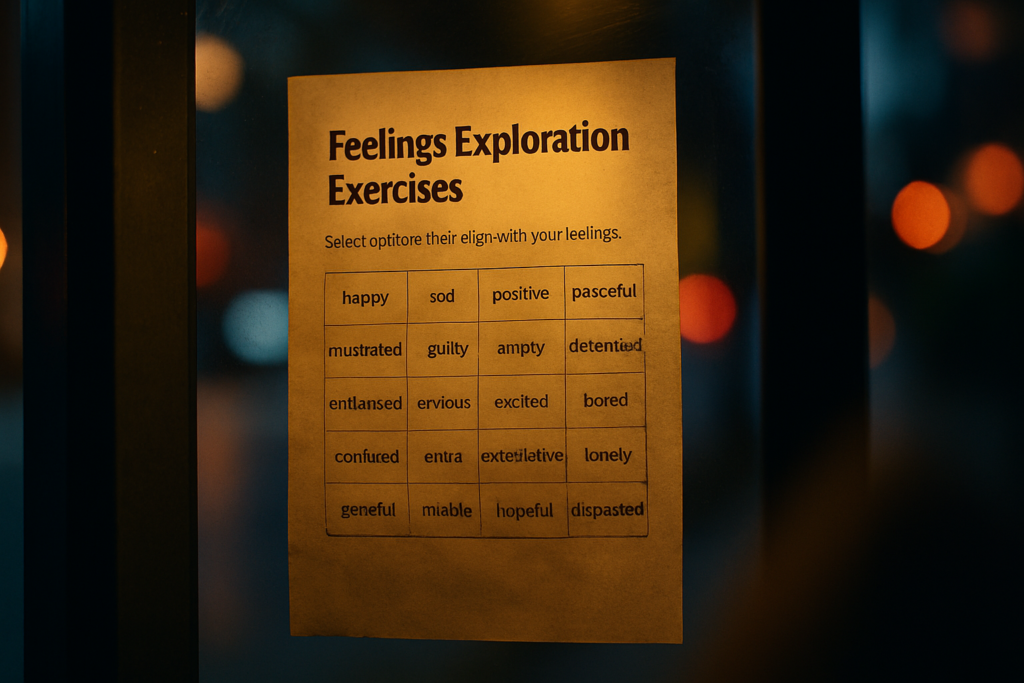
A homemade deck of feelings cards (examples: happy, nervous, frustrated, excited, sad, surprised)
A space where kids can move around safely
How to Play:
Shuffle the deck and have each child draw a card on their turn
They act out the emotion without speaking or using words
The rest of the group guesses which feeling is being expressed
Why It Works:
Builds non verbal communication skills by focusing on facial expressions and body language
Increases emotional vocabulary, even without speaking
Encourages self awareness, helping kids notice how emotions show up in the body
This activity is especially great for kinesthetic learners and can be easily modified for younger or older children. Rotate emotions regularly to introduce new vocabulary as kids grow more confident.
Activity 3: Emotion Journaling

Emotion journaling gives older kids space to sit with what they’re feeling and figure out why. A simple sentence starter like “Today I felt ___ because ___” can go a long way. It nudges them to connect the dots between emotions and events, something that’s not always obvious when you’re young.
Not all kids are ready to pour out full paragraphs, and that’s fine. Let them choose how they express things. A drawing of their day, a mood monster with a scribbled caption, or a sentence about what made lunch frustrating all count. The key is consistency and openness. You want this to be a safe habit, not a chore.
Over time, kids build their emotional vocabulary and start noticing patterns: what makes them feel proud, what leaves them tense, and how certain actions affect their mood. That awareness sets the stage for better decision making and stronger communication down the road.
Activity 4: Partnered Problem Solving
Conflict is part of growing up but how kids learn to handle it can shape their friendships, self confidence, and communication habits for life. One simple way to build those skills? Give them a relatable, low stakes situation to explore.
Try this: “Your friend took your toy what do you do?”
Ask kids to act out different ways they might respond. One child might say, “Give it back, that’s mine!” Another might go quiet or walk away. A third might calmly explain, “I don’t like that you took it. Can I have it back, please?”
The goal here isn’t to judge what’s right or wrong. It’s to open up options and get them thinking. When kids role play side by side maybe even switching roles they get to see how words, tone, and body language affect others. That fuels empathy and keeps tempers in check.
You can use different scenarios (“Someone knocked down your blocks,” “You both want the same crayon”) and keep rotating pairs. Keep the conversations short, honest, and guided when needed. The more they practice, the easier it gets. Many educators also find inspiration for fresh role-play ideas through a trusted lessons marketplace, especially when they want age-appropriate scenarios ready to go.
Conflict doesn’t have to mean chaos. With tools like these, it becomes a learning moment.
Activity 5: Gratitude Circle
This one’s simple but powerful. Set aside just a few minutes a day morning, after lunch, during circle time, whatever works and invite everyone to share one thing they’re thankful for. It can be anything: a pet, their favorite snack, a sunny day, or a friend who helped them out.
You’ll be surprised how this small routine builds a big mood shift. Kids start noticing the good stuff more often. It fosters optimism, helps them feel heard, and makes the environment whether it’s a home or classroom feel safer and more connected. The vibe changes when gratitude becomes a habit.
Consistency is key, but it doesn’t have to be fancy. Keep it casual. Keep it real.
Looking for a deeper bench of games that sharpen emotional smarts? Take a look at this list of emotional development activities loaded with ideas that work across ages. These aren’t theory heavy or time consuming they’re things you can pull off with minimal prep and still see real results.
The payoff? Kids who can name their feelings, work through tough moments, and connect better with others. That’s long term value. So keep it light, make it part of your routine, and let the learning sneak in through the fun.